- Salt it
- Give it time
- Let it sour
- Old ways to make food keep
CURED
Salt and air
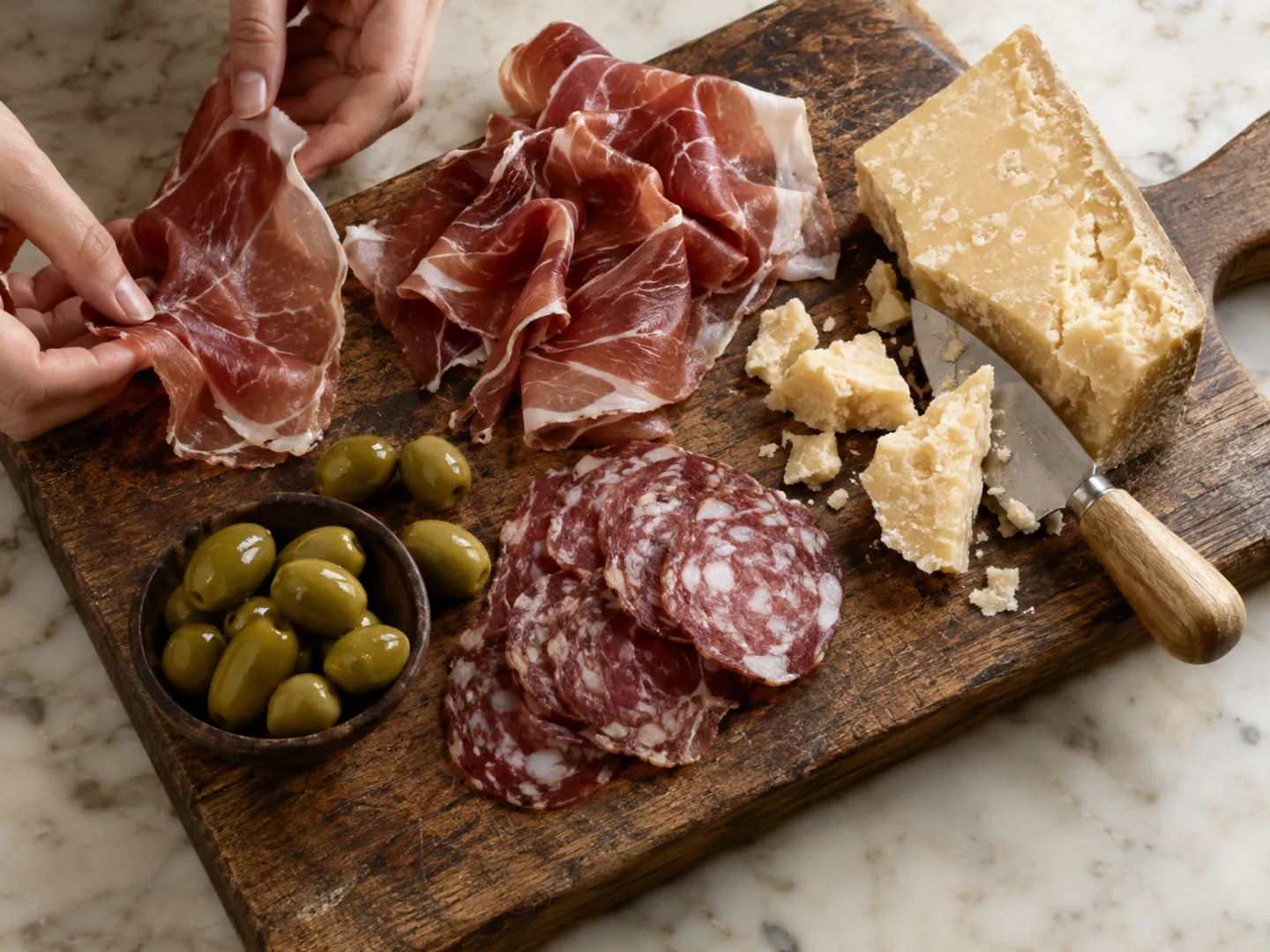
Parma ham is pork and sea salt only, salted and rested for at least 90 days, then aged.
How long? doodledeli
Updated
THE DELI COUNTER, EXPLAINED
What actually happens to the food behind the glass.
A Parma ham is pork and sea salt left alone for over a year. Parmigiano Reggiano is milk, salt and rennet given twelve months or more. Sauerkraut is cabbage soured by its own bacteria. Here is how each one keeps, and what counts as processed meat.
Plain English, with the sources linked.
CURED aged · pickled
Look behind the glass
HOW IT KEEPS
Most of what sits behind deli glass
was made to last without a fridge.
CURED
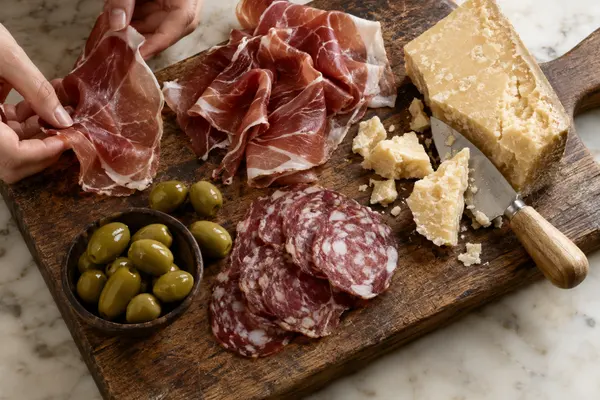
Parma ham is pork and sea salt only, salted and rested for at least 90 days, then aged.
How long?AGED
Parmigiano Reggiano is matured for at least 12 months, with no additives allowed.
Read the rulesFERMENTED
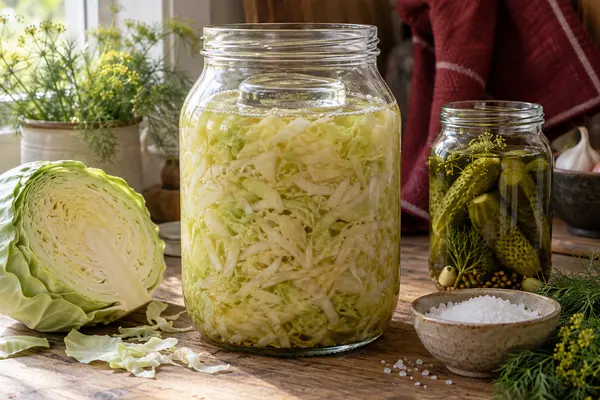
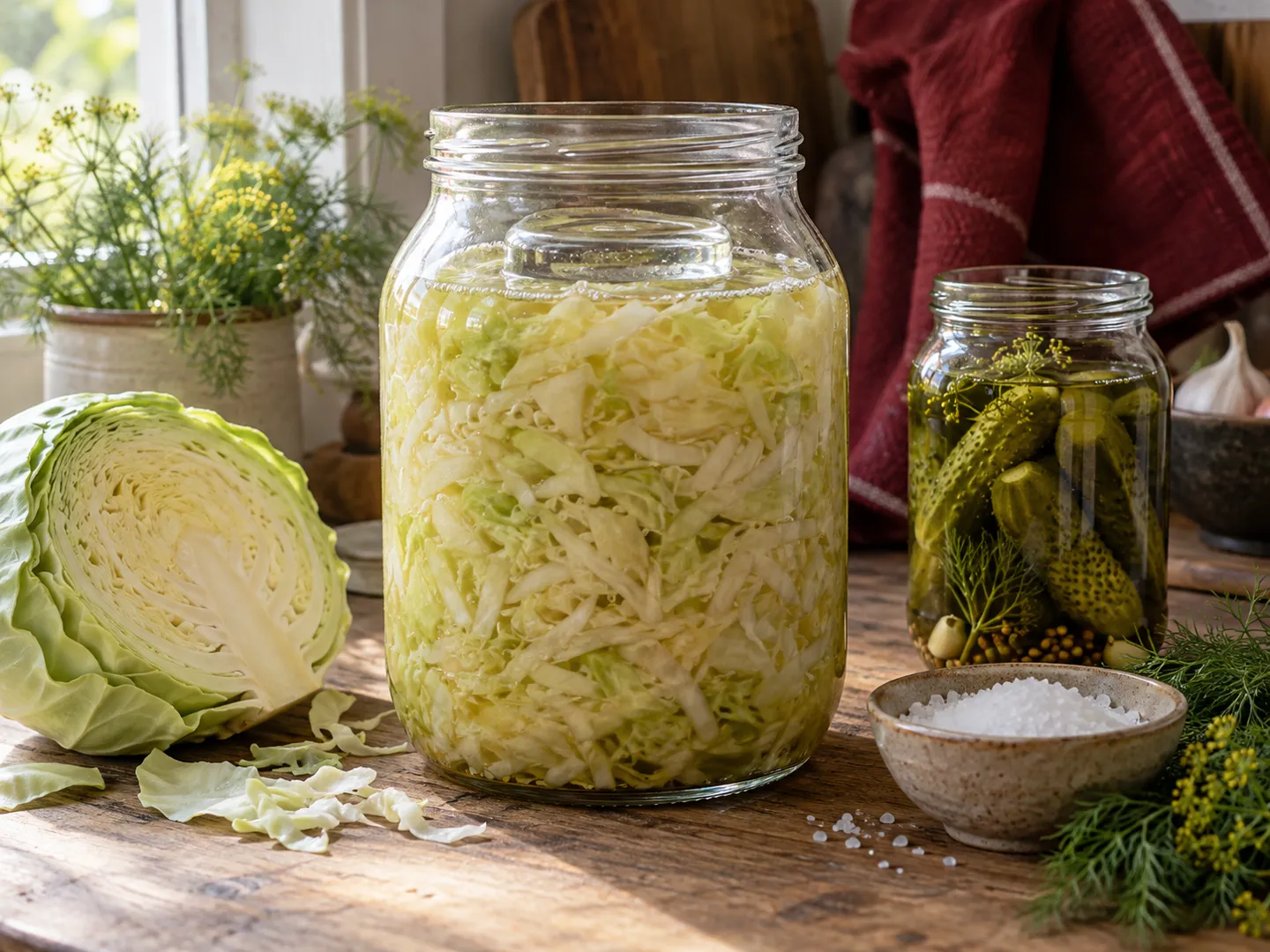
In sauerkraut, lactic acid bacteria turn the cabbage’s sugars into acid. No vinegar needed.
Try the pickerBEHIND THE GLASS
Choose an item to see how it is made to keep, and whether it counts as processed meat under NHS guidance.
Processed meat means meat preserved by smoking, curing, salting or adding preservatives. Cheese and vegetables are not part of that count.
TWO NUMBERS WORTH KNOWING
One number from the curing rules,
one from the health research.
14 months
Minimum ageing
The Prosciutto di Parma specification allows two ingredients, pork and sea salt, and no preservatives or other additives. Salting and resting take at least 90 days before the long ageing even starts.
PARMA HAM · PDO RULES
+18%
Colorectal cancer risk, per 50 g a day
A working group of 22 experts from 10 countries, convened by the WHO’s cancer agency, classified processed meat as carcinogenic to humans (Group 1) and estimated this rise in risk for each 50 g eaten daily.
PROCESSED MEAT · IARC 2015
The two sit side by side for a reason: the same salt and curing that make deli meat keep are what put it in the processed meat category.
AT THE COUNTER
A Parma ham’s list should be short: pork and sea salt. A longer list tells you something else was added.
The rules set minimums: 12 months for Parmigiano Reggiano and 14 months for Parma ham. Many are aged longer.
The NHS suggests cutting down to 70 g a day of red and processed meat if you eat more than 90 g.
Chicken and turkey luncheon meats are processed meat too, by the NHS definition.
DELI FACTS
Delicatessen entered American English in 1877 from German, meaning fine foods. It meant a shop from 1901, and deli is recorded from 1954.
Its specification lists pork and sea salt only. The finished whole ham must weigh between 8.2 kg and 12.5 kg.
The rules set cow’s milk, salt and calf rennet as the only ingredients, ban additives and require at least 12 months of maturing.
Clemson University’s guide aims for 2.25 to 2.5% salt, which favours the bacteria that start the fermentation.
The WHO’s cancer agency defines it as meat transformed by salting, curing, fermentation, smoking or other processes to add flavour or improve preservation.
QUICK QUESTIONS
Short answers to the questions people ask most.
Where does the word deli come from?
Delicatessen came into American English in 1877 from German Delikatessen, meaning fine foods, which goes back to French délicatesse. It meant a shop from 1901, and the short form deli is recorded from 1954.
Is Parma ham made with nitrites or preservatives?
Not under its rules. The Prosciutto di Parma specification lists only pork and sea salt as ingredients and states that no chemicals, preservatives or other additives are used. The ham is salted, rested and then aged for at least 14 months.
How much deli meat is too much?
NHS guidance says that if you eat more than 90 g of red and processed meat a day, you should cut down to 70 g. Salami, ham and other deli meats count towards that total.
Do chicken and turkey slices count as processed meat?
Yes. The NHS lists sliced luncheon meats, including chicken and turkey versions, as processed meat, alongside ham, salami, bacon, sausages and pâté.
What makes sauerkraut sour?
Not vinegar. Lactic acid bacteria already on the cabbage turn its sugars into acids and flavour compounds, while salt draws out the juice and keeps unwanted bacteria in check.
A NAME WITH FLAVOUR
doodledeli.com is part of the DoodleSale portfolio. It isn't in an auction right now, but you can ask about leasing it.